



Efficient application of the FDL double-shaft mixer in the production of acrylic adhesive
Nov 20, 2026
Acrylic ester adhesive, as an important chemical material based on acrylic acid and its derivative polymers, occupies a core position in industrial manufacturing and daily life due to its excellent weather resistance, transparency, and adhesive properties. The complexity of the production process increases with the improvement of performance requirements, from thermoplastic acrylic esters to third-generation modified products. Especially in the process of solution polymerization and lotion polymerization, the mixing uniformity, heat transfer efficiency, and stability of the reaction system of high-viscosity materials determine the molecular weight distribution and adhesive strength of the final product.

The synthesis of acrylate adhesive mainly adopts two paths: solution polymerization or lotion polymerization, and these two processes put forward completely different strict requirements for mixing equipment.
Viscosity surge and heat transfer hysteresis in solution polymerization
In the solution polymerization process, monomers (such as n-butyl acrylate) are dissolved in solvents such as ethyl acetate or butyl acetate, and heated to 75-80 ℃ under the action of organic peroxide initiators for reaction. As the polymerization reaction proceeds, the viscosity of the system will sharply increase. If the mixing equipment cannot provide sufficient shear force and displacement capacity, high-viscosity materials are prone to adhere to the kettle wall, forming a thermal resistance layer, resulting in local overheating or uneven reaction. In addition, in order to prepare polymers with relative molecular weights ranging from 2000 to 50000, it is necessary to ensure sufficient contact between the initiator and the monomer at the microscopic level; otherwise, it will affect the uniformity of molecular weight distribution.
Stability control in lotion polymerization
Lotion polymerization is more complex, involving multiphase systems of monomers, deionized water, emulsifiers (anionic and non-ionic), and water-soluble initiators. The data indicates that although non-ionic surfactants have good chemical stability, their emulsifying power is weak and they are prone to forming coarse-grained clots; The anionic type has good mechanical stability but poor chemical stability. Therefore, it is often necessary to combine and use multiple surfactants in production. This multi-component system is extremely sensitive to mixing efficiency. If there are blind spots or insufficient shear during stirring, it can easily lead to emulsion breaking, agglomeration, or wide particle size distribution, directly affecting the initial adhesion and cohesion of the adhesive.
Difficulties in discharge and cleaning under high viscosity
Acrylic adhesives, especially products with high molecular weight or high solid content, often have extremely strong adhesion. Traditional single-axis mixers have serious residue on the kettle wall when processing such materials, which not only causes waste of raw materials, but also increases the difficulty of cleaning and the risk of cross-contamination.
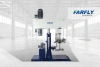
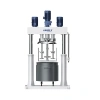
In response to the above-mentioned process pain points, the FDL Double Shaft Mixer provides a systematic solution for the efficient production of acrylic adhesive with its precise mechanical design and powerful power output.
Dual-axis collaborative mechanism: strengthening shear and macroscopic mixing
The core of the FDL Double Shaft Mixer lies in its dual-axis collaborative working mechanism. It is equipped with both a low-speed scraper stirrer and a high-speed disperser.
High-speed disperser: it provides strong shear force, can quickly break the oil drops or aggregates in lotion polymerization, promote the micro-mixing of emulsifier and monomer, and ensure that the latex particles are small and evenly distributed. For solution polymerization, it can accelerate the diffusion of initiators in high-viscosity melts.
Low-speed wall-scraping mixer: responsible for material displacement at the macroscopic level. It continuously pushes the material in the center of the kettle towards the edge and brings the edge material into the center, eliminating the laminar blind spots in traditional mixing. This dual effect of "shear+convection" is particularly suitable for acrylic ester systems with viscosity up to 150000 CPS, ensuring timely export of reaction heat and uniform distribution of reactants.
PTFE scraping and mirror polishing: achieving zero residual mixing
In response to the characteristic of acrylic ester materials being prone to sticking to walls, the FDL Double shaft mixer uses a specially designed PTFE (polytetrafluoroethylene) scraper. PTFE material has extremely low surface energy, which can effectively prevent adhesion. The scraper closely adheres to the precision-machined and mirror-polished inner wall of the container, continuously scraping off the wall material during rotation and rolling it into the mixing zone.
This design brings double benefits: first, it significantly improves the heat transfer efficiency and prevents gel caused by local overheating; Secondly, it achieves "residue-free mixing", significantly reducing the cleaning time and solvent consumption between batches, which is particularly important for production lines that require frequent changes in formula colors.
Heavy-duty structure and low-noise operation: ensuring stability in large-scale production
The large-scale production of acrylic adhesive requires equipment with extremely high rigidity. The FDL Double shaft mixer adopts a large-area bed body plate design, with a thick and sturdy structure that can be installed underground and fixed to the main shaft with bolts, effectively absorbing the reaction force generated by high-viscosity mixing. This precise design ensures vibration-free and low-noise operation of the equipment at full load, extends the service life of mechanical seals and bearings, and reduces maintenance costs.
Flexible configuration and security compliance
In order to adapt to different production process requirements, the FDL Double shaft mixer provides a high degree of flexibility. The hydraulic lifting and swinging mechanism allows for single or multiple tank operation, combined with pneumatic or manual quick clamping mode, ensuring absolute safety of the mixing tank during high-speed operation. In addition, the equipment can be optionally equipped with a vacuum dispersion function, which is crucial for removing bubbles involved in lotion polymerization or volatile solvents in solution polymerization. In terms of safety standards, the device can provide configurations that comply with ATEX II 2GD c IIB T3 explosion-proof standards and are suitable for the flammable solvent environment involved in acrylic ester production.

Recent Posts

Contact US
Product Information
Quantity
Unit
Piece
Support order samples, customization, wholesale direct, and complete payment. If the product you look for does not have corresponding customized content, pls fill out the form below to contact us, and we will reply ASAP.