



FYL Hydraulic Discharging Machine: Efficient Discharge of Inorganic Adhesives
Aug 28, 2026

The preparation and application of inorganic adhesives. Adhesives formulated with inorganic substances, such as phosphates, silicates, sulfates, borates, and metal oxides, as binders are called inorganic adhesives. Inorganic adhesives have the characteristics of non-combustibility, high-temperature resistance, and good durability. In addition, they have abundant raw material resources, do not pollute the environment, and are easy to apply. They are a widely used and promising type of adhesive. Generally, they can withstand temperatures ranging from 800 ℃ to 3000 ℃. Generally speaking, inorganic adhesives can be cured at room temperature to 350 ℃, and some can be used at temperatures above 1000 ℃. Therefore, these adhesives have been widely used in various industries that require heat resistance. At present, inorganic adhesives are developing towards structural and functional adhesives, which is very advantageous for the development of vast markets such as aerospace, aircraft, automotive, and electronics, and have been widely used for heat-resistant bonding of various materials such as metals and ceramics. Inorganic adhesives, together with other new inorganic materials, will become one of the most promising new materials in the 21st century.
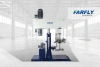
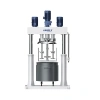
FYL Hydraulic Discharging Machine is a matching discharge equipment designed specifically for high-viscosity adhesives, inks, resins, and other materials. As an ideal partner for dual planetary power mixers, dual planetary mixers, and multifunctional mixers, it can efficiently complete the discharge, packaging, or removal of mixed materials from barrels. This device applies pressure to the materials inside the material bucket through the hydraulic drive of the pressure plate and stably extrudes high-viscosity adhesive from the bottom outlet of the material bucket or the pressure plate pipeline, achieving precise transportation to the filling station or downstream process, solving the industry pain points of difficult discharge and high residue materials for high-viscosity materials.
Inorganic adhesives have some shortcomings, such as poor airtightness; Moisture absorption can cause a decrease in resistance; It is difficult to obtain products with excellent physical properties through room-temperature curing; High brittleness and low strength in flat docking, overlapping, impact, and peeling; and limited use. There are strict requirements for the roughness of the bonded surface, the timing of filler addition, and the amount of filler used during simultaneous bonding operations.
The FYL Hydraulic Discharging Machine pressure plate compression structure plays a key role in the production of high-viscosity adhesives commonly used in inorganic adhesive production. The pressure plate continues to descend as the decrease of materials, which can fully press the material inside the barrel, significantly reducing the residual material on the barrel wall and bottom, and solving the industry pain point of high-viscosity materials with large discharge residues. This feature is particularly important for batch continuous inorganic adhesive production lines, reducing material waste and improving raw material utilization. Inorganic adhesives can add various inorganic fillers as needed, and the equipment can stably adapt to the discharge packaging process of concentrated adhesive semi-finished products after blending, and adapt to the filling operation of various forms of finished products.

The flexible configuration of the FYL Hydraulic Discharging Machine further adapts to the diverse production needs of inorganic adhesives. The equipment can adapt to material barrels of different specifications and production lines of different capacity scales. The hydraulic drive system can adjust the output pressure and adjust the extrusion pressure for inorganic adhesives with viscosity differences caused by different formulations and packing amounts, to prevent slow discharge or material overflow due to low or high pressure. The equipment can be connected to filling equipment to complete automated discharge and packaging operations, reducing manual intervention. At the same time, the overall structure of the equipment is sturdy and can adapt to continuous operating conditions in inorganic adhesive production workshops, ensuring long-term stable operation.
The FYL Hydraulic Discharging Machine effectively solves the industry pain points of difficult discharge of high-viscosity materials and high material residue in the production process of inorganic adhesives through advantages such as hydraulic pressure plate extrusion, low-residue discharge, adjustable pressure, and flexible docking with downstream equipment. It provides a consistent production guarantee for inorganic adhesive products in fields such as metal and ceramic heat-resistant bonding.


Recent Posts


Contact US
Product Information
Quantity
Unit
Piece
Support order samples, customization, wholesale direct, and complete payment. If the product you look for does not have corresponding customized content, pls fill out the form below to contact us, and we will reply ASAP.