



FXJ Planetary Mixer: Efficient Production of Acrylic Adhesive
Aug 07, 2026
Acrylic adhesive is an adhesive based on polymers or copolymers of acrylic acid and its derivatives. By changing the monomers and polymerization conditions of acrylic ester polymers, such as catalyst dosage, reaction time, reaction temperature, and monomer concentration, the molecular weight, polarity, solubility, glass transition temperature, and other physical properties of the polymer can be adjusted.

This type of adhesive has outstanding comprehensive advantages, and acrylic adhesive has excellent optical properties. It has color retention, light resistance, and weather resistance, is not easily oxidized, and is not sensitive to UV degradation. The antioxidant activity of poly(methyl methacrylate) with an alpha-methyl group is better. Acrylic adhesive is water-resistant, alkali-resistant, and oil-resistant, making it a good oil-resistant sealant. The molecule contains ester groups, and some may also have functional groups such as carboxyl and hydroxyl. It has strong hydrogen bonding properties and can adhere to a wide range of adhesives. Polyacrylates are softer and more ductile than their corresponding polymethacrylates.
The production process of acrylic adhesive includes powder feeding, high-viscosity polymer blending, and high-temperature polymerization. The viscosity range of materials is large, and the production pain points are prominent. The materials are prone to adhering to the kettle wall, forming mixing dead corners, resulting in uneven reactions and batch performance differences; The polymerization reaction requires strict temperature control accuracy; The mixing process is prone to bubble formation and uneven powder dispersion, which directly affects the density and bonding strength of the adhesive film. Therefore, the production equipment has extremely high requirements for the overall mixing ability, temperature control accuracy, anti-wall hanging, and vacuum degassing function. FXJ Planetary mixer is designed specifically for acrylic adhesive systems, providing targeted solutions to industry production challenges.
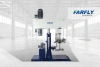
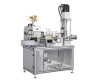
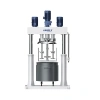
The FXJ Planetary mixer consists of two planetary mixing blades that rotate along the container wall around a common axis, while also spinning around their respective axes. The blades rotate around the container, constantly carrying away the material on the container wall and guiding it towards the center. After the central wheel rotates once, the blades have already passed through the entire container, and after a few turns, most of the materials have been mixed. Within a short period of time, after several dry rotations, all materials are completely and uniformly mixed. Planetary mixers are particularly suitable for dissolving, mixing, blending, and reacting materials ranging from powders to high viscosity and density. Low-speed blades can be selected from frame, paddle, Fried Dough Twists frame, and other blades. The vacuum design ensures that materials work in a sealed environment and can intelligently control the temperature to achieve accurate temperature control.

During the polymerization stage of acrylic adhesive, the material has high viscosity and is prone to sticking to the kettle wall for a long time, resulting in local excessive reactions, batch color differences, and fluctuations in adhesive performance. The FXJ Planetary mixer comes standard with a PTFE scraper that fits snugly against the kettle wall. During mixing, the adhesive material on the kettle wall is continuously scraped off, eliminating mixing dead corners and allowing all materials to participate in the reaction synchronously, greatly reducing performance deviations between different production batches of products.
FXJ Planetary mixer relies on five core advantages, including planetary revolution rotation composite stirring, PTFE anti-hanging wall scraper, vacuum sealing, high-precision intelligent temperature control, and flexible selection of multiple blades, to completely solve the industry pain points of material hanging wall, uneven dispersion, unstable temperature control, bubble defects, and inconsistent batch performance in the production of acrylic adhesive. It stably produces acrylic adhesive with excellent optical performance, medium resistance, and adhesive performance, and is suitable for large-scale production in various fields such as metal and composite substrate bonding, sealing, and coating.
.jpg?x-oss-process=image/resize,w_100/quality,q_100)

Recent Posts

Contact US
Product Information
Quantity
Unit
Piece
Support order samples, customization, wholesale direct, and complete payment. If the product you look for does not have corresponding customized content, pls fill out the form below to contact us, and we will reply ASAP.